SR Derma Laser Clinic
stretch-marks

Stretch Marks

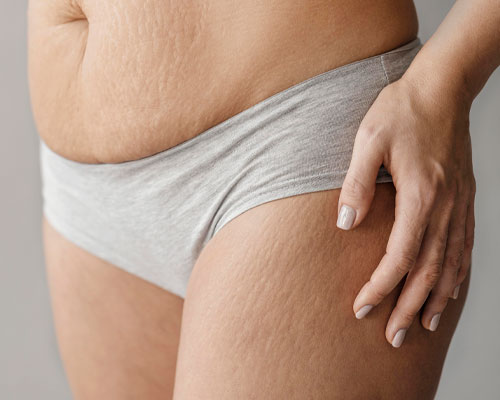
Stretch marks (striae) are long, narrow streaks or lines that develop on the skin when it stretches or shrinks rapidly. This rapid change causes the collagen and elastin, which support the skin, to rupture. As the skin heals, stretch marks can appear. They are commonly associated with pregnancy, weight gain, or rapid muscle growth but can affect anyone.

Types of Stretch Marks

  1. Striae Rubrae:
    • Appearance: Red, pink, or purple stretch marks. These are fresh marks that appear when the skin is actively stretching or has recently stretched.
    • Location: Commonly seen on the abdomen, thighs, breasts, and hips.
    • Texture: Slightly raised and may feel itchy.
  2. Striae Albae:
    • Appearance: White or silver stretch marks. Over time, as the marks heal, they fade and become paler than the surrounding skin.
    • Location: Same as striae rubrae, but the marks become smoother and less noticeable as they mature.
    • Texture: Flat and no longer raised.
  3. Striae Gravidarum:
    • Appearance: These are stretch marks that specifically develop during pregnancy, often around the abdomen, breasts, and hips.
    • Location: Abdomen, lower back, breasts, and hips.>/li>
    • Texture: Initially red or purple, fading to white over time.
  4. Striae Atrophicans:
    • Appearance: Stretch marks are caused by skin atrophy, which can occur due to medical conditions or long-term use of corticosteroids.
    • Location: Often associated with corticosteroid use or underlying medical conditions.
    • Texture: Thin, atrophic (shrunken) skin with distinct streaks.

Are Stretch Marks Permanent?

Stretch marks tend to fade over time, but they are usually permanent. However, with the right treatments, their appearance can be significantly reduced, and they can become much less noticeable. Early intervention, especially when the marks are still red or pink (striae rubrae), tends to yield the best results.
Prevention of Stretch Marks

  • Moisturize: Regular application of moisturizers like cocoa butter, shea butter, or oils can help keep the skin hydrated and more elastic.
  • Maintain a Healthy Weight: Gradual weight gain or loss is less likely to cause stretch marks than sudden fluctuations.
  • Hydration: Drinking plenty of water helps keep the skin soft and supple, reducing the risk of stretch marks.
  • Balanced Diet: Consuming foods rich in vitamins A, C, and E, as well as zinc, can support skin health and promote elasticity.
  • Topical Treatments: Products containing hyaluronic acid or retinoids (for non-pregnant individuals) may help prevent or reduce stretch marks.

Conclusion

At SR Derma Clinic, we offer a range of advanced treatments to help reduce the appearance of stretch marks and improve overall skin texture. Whether you’re dealing with recent stretch marks or ones that have been present for years, we can create a personalized treatment plan to help you achieve smoother, more even skin. Contact us today to explore the best options for your skin!
SR Derma Laser Clinic

No next service to show!

Body Treatments for Stretch Marks & Scar Remodeling

Stretch Marks, Trauma & Surgical Scars, Acne Scarring, Hyperpigmentation, Sun-Damaged Skin

Sessions

SERVICES AVAILABLE

STARTS FROM

(1 Session)

Stretch Marks & Scar Remodeling

£ 450

Course of 3 Sessions

Stretch Marks & Scar Remodeling

£ 1,215

Course of 6 Sessions

Stretch Marks & Scar Remodeling

£ 2,160

Scar Remodeling & Skin Resurfacing

Acne Scarring, Trauma Scars, Surgical Scars, Dilated Fibrotic Pores, Burns Scarring, Self-Harm Scars

Sessions

SERVICES AVAILABLE

STARTS FROM

(1 Session)

Scar Remodeling & Skin Resurfacing

£ 350

Course of 3 Sessions

Scar Remodeling & Skin Resurfacing

£ 945

Course of 6 Sessions

Scar Remodeling & Skin Resurfacing

£ 1,975